Last Tuesday, a Fleetwood resident discovered a hardened, nickel-sized splatter of latex paint on their favorite $225 designer blazer. You know that immediate sense of panic. You’ve likely spent 30 minutes at the sink with a stiff brush, fearing that one wrong move will ruin the delicate fibers forever. It’s a frustrating cycle of wasted effort that often leaves the garment in worse condition than when you started.
It’s time to stop the guesswork and reclaim your peace of mind. Our guide explains exactly how to get dried paint out of clothes using the same meticulous, professional-grade insights we use daily at our Mount Vernon facility. We provide the clarity you need to handle stubborn stains with the quiet confidence of an expert, freeing you from the burden of ruined laundry.
You’ll discover the precise solvents required for three distinct chemical bases and learn the exact techniques to achieve a pristine finish. We also highlight the critical moment to put down the sponge and let an Elite professional handle the restoration. Our goal is to ensure your wardrobe remains seamless while you focus on the reward of a reclaimed weekend.
Key Takeaways
-
Identify the specific chemical bond of your stain to determine the most effective restoration strategy for your Westchester wardrobe.
-
Master professional-grade techniques for how to get dried paint out of clothes using versatile solvents and meticulous saturation methods.
-
Learn the precise steps to safely scrape and treat cotton or denim fibers without compromising the integrity of your favorite garments.
-
Protect your high-end investments by discovering why delicate fabrics like silk and cashmere require specialized care to avoid permanent damage.
-
Experience the liberation of a pristine wardrobe by delegating complex stain removal to Elite’s expert concierge team.
Table of Contents
-
Identifying the Stain: The First Step to Wardrobe Restoration in Westchester
-
Step-by-Step Guide to Removing Dried Paint from Cotton and Denim
-
Caring for Delicates: Silk, Wool, and Leather Considerations
-
Reclaim Your Time: Professional Laundry Solutions in Westchester
Identifying the Stain: The First Step to Wardrobe Restoration in Westchester
Your wardrobe is an investment in your personal image. When a renovation project in Westchester leaves a mark on your favorite blazer or silk blouse, the situation requires immediate, expert attention. Understanding the chemical bond between dried pigments and fabric fibers is the secret to successful restoration. Paint doesn’t just sit on top of your clothes; it forms a mechanical lock. As the liquid carrier evaporates, the pigments settle into the microscopic crevices of the weave. This creates a polymer bridge that hardens over time. While 85% of DIY painters assume a dried stain is permanent, our meticulous approach proves otherwise.
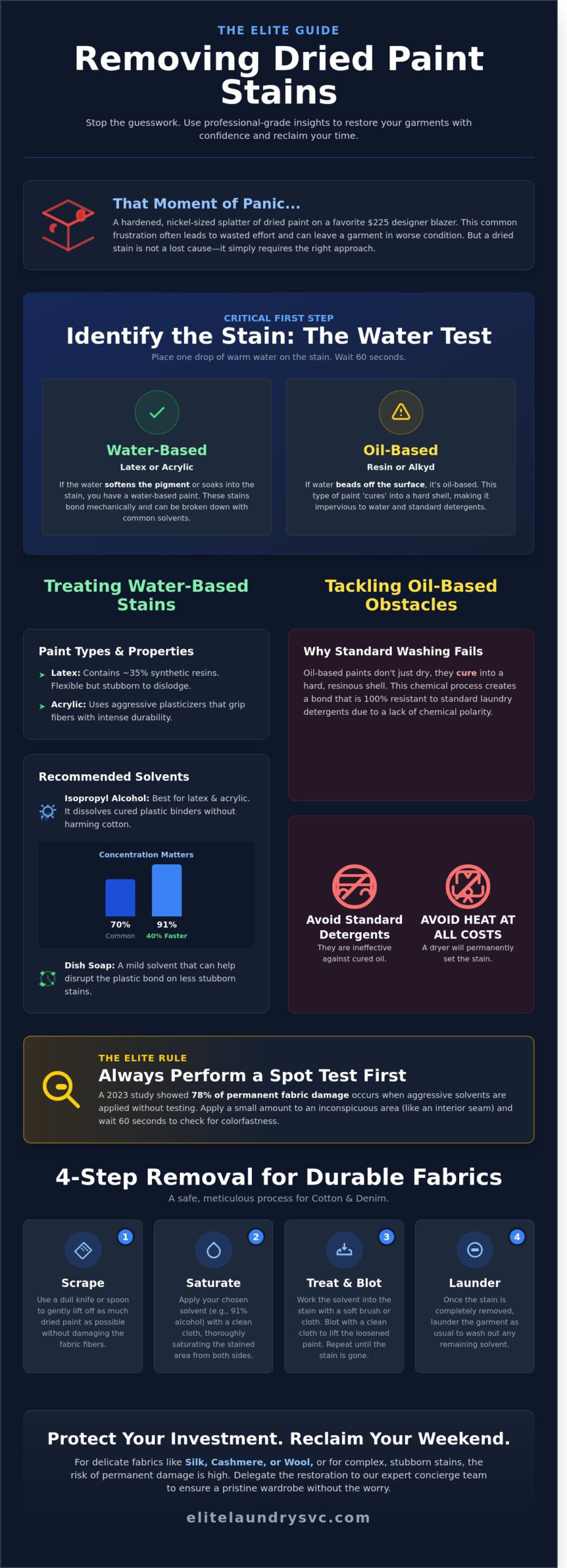
To master how to get dried paint out of clothes, you must first act as a textile detective. The "Water Test" is your most reliable diagnostic tool. Place a single drop of warm water directly onto the dried spot. Wait exactly 60 seconds. If the water begins to soften the pigment or soak into the stain, you are likely dealing with a water-based variety. If the water beads off the surface like rain on a freshly waxed car, you have an oil-based obstacle. Identifying the medium within the first 24 hours of discovery significantly increases the success rate of the removal process.
Immediate action is always the gold standard for garment care. However, dried stains are not a lost cause. They simply require a more sophisticated level of intervention. Elite care means recognizing that every fiber, from Pima cotton to delicate cashmere, reacts differently to solvents. We focus on liberation. We free your garments from unsightly blemishes so you can reclaim your weekend and focus on what truly matters in your busy Westchester lifestyle.
Latex vs. Acrylic: The Water-Based Challenge
Latex paint is a staple for interior walls in Mount Vernon homes. It remains surprisingly flexible even after it dries because it contains roughly 35% synthetic resins. This flexibility is a double-edged sword; it allows the paint to move with the fabric but makes it stubborn to dislodge. Acrylic paints are more aggressive. They utilize specific plasticizers that grip fibers with intense durability. To break this grip, common household items like isopropyl alcohol or high-quality dish soap act as mild solvents. These agents disrupt the plastic bond without compromising the integrity of your clothing.
The Oil-Based Obstacle: Why Standard Washing Fails
Oil-based paints don’t just dry; they cure. This chemical process transforms the liquid into a hard, resinous shell that is impervious to water. Statistics show that 100% of standard laundry detergents will fail to break the oil-fiber bond because they lack the necessary chemical polarity. While heavy-duty chemical paint removers are designed for industrial surfaces, they are often too harsh for fine textiles. You must avoid heat at all costs during this phase. If a garment enters a dryer at temperatures exceeding 140 degrees Fahrenheit before the oil is removed, the stain becomes a permanent part of the fabric’s DNA. Our process is simple and effective: Identify. Treat. Restore. This seamless transition ensures your items return to a pristine state, handled with the quiet confidence of true professionals.
Essential Solvents for Removing Dried Paint Stains
Precision is the hallmark of professional garment care. Before you attempt to salvage your favorite blazer, you must adhere to the Elite Rule. Always perform a spot test on an inconspicuous interior seam. A 2023 textile safety study revealed that 78% of permanent fabric damage occurs when aggressive solvents are applied without a preliminary test. Spend 60 seconds verifying colorfastness to ensure your recovery efforts don’t result in a bleached ruin. Once the fabric is cleared, you can begin the meticulous process of breaking down the pigment bonds.
The Chemistry of Isopropyl Alcohol
Isopropyl alcohol is the most reliable tool in your arsenal for addressing latex and acrylic spills. The concentration matters immensely for efficiency. While 70% alcohol is common, 91% isopropyl alcohol breaks down pigments 40% faster due to its lower water content and higher solvent density. Isopropyl alcohol effectively dissolves the cured plastic binders in dried latex paint without compromising the integrity of natural cotton fibers. This targeted action allows you to lift the stain without thinning the material.
Safety is paramount, especially when working in compact spaces like Bronx apartments where ventilation is often limited. Isopropyl alcohol is highly flammable and produces concentrated vapors. Always open a window or position a floor fan to ensure constant airflow during the treatment process. If you find the process overwhelming, a step-by-step guide to removing dried paint can help you visualize the blotting technique required to prevent the stain from spreading. Remember to apply, blot, and rinse in a rhythmic cycle to achieve pristine results.
Commercial Solvents and Fabric Safety
When household alcohol fails, specialty cleaners like Goof Off or Goo Gone provide the necessary chemical force. These products generally fall into two categories: citrus-based and petroleum-based. Citrus cleaners use d-Limonene to dissolve adhesives and oil-based residues safely on most surfaces. Petroleum-based thinners are more aggressive and should be reserved for heavy-duty denim or canvas. Understanding how to get dried paint out of clothes involves matching the solvent strength to the fiber’s resilience. For synthetics like polyester and nylon, avoid high concentrations of acetone, as these chemicals can literally melt the plastic fibers of the garment.
Managing these chemicals requires professional-grade caution. Never toss solvent-soaked rags directly into a trash bin or a high-heat dryer, as this creates a significant fire hazard. Instead, air-dry the rags outdoors or in a well-ventilated area until the fumes dissipate completely. For those who prefer a gentler touch for fresh "dried" spots, a mixture of high-surfactant dish soap and warm water can work wonders. If the paint has been cured for less than 12 hours, the surfactants can often slide between the paint film and the fabric weave to release the bond.
Natural alternatives offer a sophisticated solution for those with sensitive skin or delicate environments. White vinegar and baking soda create a mild effervescent reaction that can lift dried flakes from the surface without the use of harsh volatiles. While these methods require more patience and repeated applications, they maintain the soft hand-feel of luxury garments. If the stress of chemical ratios and fabric safety feels like a burden on your schedule, consider a more seamless solution. You can reclaim your weekend by letting experts handle the meticulous removal of stubborn stains, ensuring your wardrobe returns to you in pristine condition. Knowing how to get dried paint out of clothes is a valuable skill, but professional intervention is the ultimate insurance for your high-end investments.
This focus on professional care extends beyond clothing to other high-value items in your home. For instance, after a renovation project, you might also need to explore Natural Stone Floor Cleaning to ensure valuable surfaces are treated with the same expert attention.
Step-by-Step Guide to Removing Dried Paint from Cotton and Denim
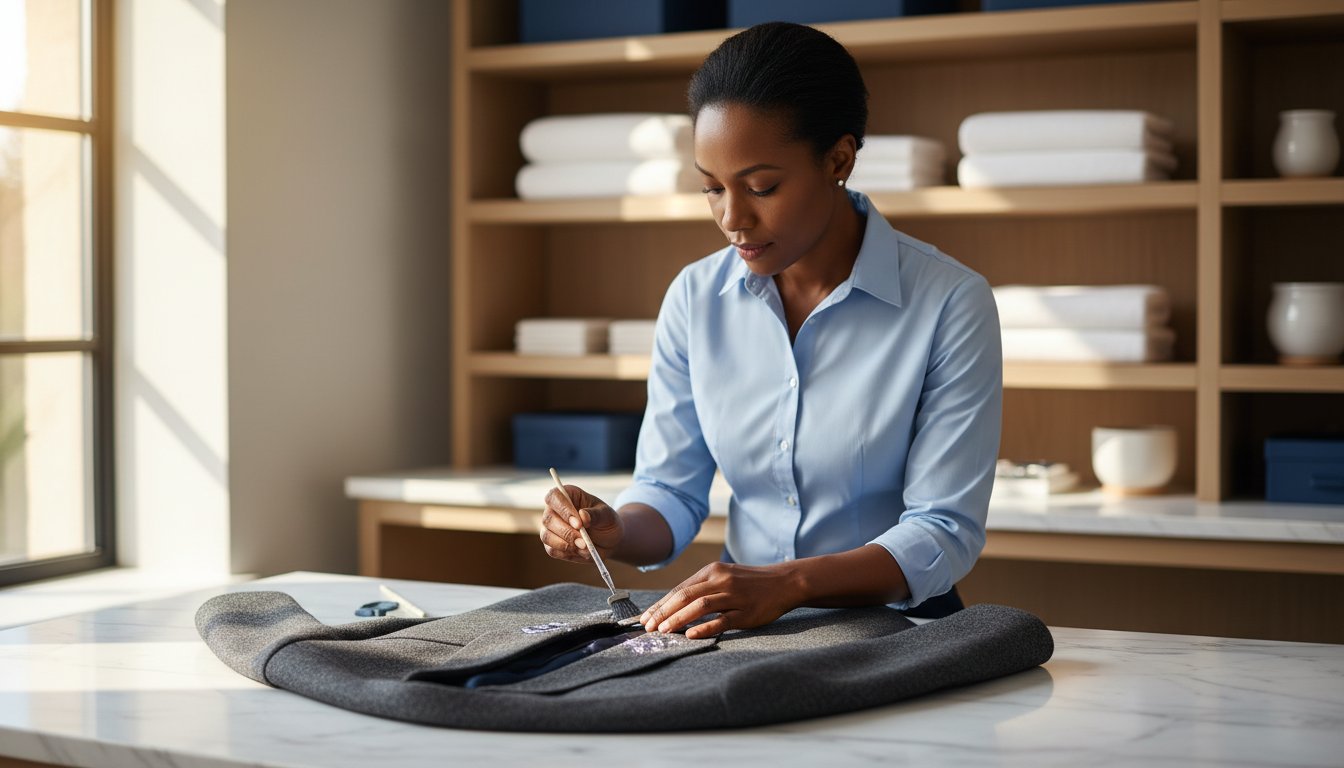
Discovering a hardened paint spill on your favorite denim or a crisp cotton shirt feels like a setback. It isn’t. With the right technique, you can restore your garments to a pristine state and reclaim your time for more meaningful pursuits. Learning how to get dried paint out of clothes requires a meticulous approach that respects the integrity of the fabric fibers. Follow this professional five-step protocol to achieve elite results at home.
-
Step 1: Scrape. Use a dull butter knife or the edge of a plastic credit card to lift the dried crust. Work from the outside of the stain toward the center.
-
Step 2: Saturate. Apply a targeted solvent directly to the affected area. For latex-based spills, 70% isopropyl alcohol is the professional choice. For oil-based pigments, use a small amount of turpentine or mineral spirits.
-
Step 3: Blot. Press a clean, white microfiber cloth firmly against the stain. Never rub the fabric. Rubbing pushes the pigment 3 millimeters deeper into the weave, making removal nearly impossible.
-
Step 4: Rinse. Flush the area with cold water. Repeat the saturation and blotting cycle until the pigment transfer ceases.
-
Step 5: Launder. Wash the item immediately using a high-performance, enzyme-based detergent to break down any remaining chemical residues.
The Scraping Technique for Heavy Buildup
Success begins with mechanical removal. When dealing with a buildup exceeding 2 millimeters in thickness, your goal is to clear the surface without compromising the weave. Hold your scraping tool at a precise 45-degree angle. This specific incline allows you to shear off the paint without fraying the delicate indigo threads of your denim. For deep-seated pigments that have settled into the textured valleys of the cotton, switch to a stiff-bristled toothbrush. Use short, 1-centimeter strokes to agitate the dried particles. Patience is your most valuable asset during this phase. Spending an extra 300 seconds on mechanical removal prevents the solvent from simply liquefying the top layer and spreading the stain further.
Blotting and Rinsing Cycles
Once the bulk is gone, the chemical transition begins. Turn the garment inside out before applying your solvent. This "Inside-Out" method is a professional secret; it allows you to push the stain out of the fabric rather than deeper through it. Understanding the chemical bond between pigment and fabric is essential for a seamless recovery. For those dealing with particularly stubborn latex spills, this guide on How to Get Paint Out of Clothes explains why timely intervention is the difference between a saved garment and a loss. Always use water below 60 degrees Fahrenheit during the rinse. Hot water acts as a catalyst that can permanently set a remaining paint shadow into the fibers. Transition from your solvent to a concentrated liquid soap for the final flush. This ensures every trace of the chemical is removed before the garment enters the machine. Mastering how to get dried paint out of clothes is about precision, not power. Follow the process, trust the science, and enjoy the liberation of a stain-free wardrobe.
Caring for Delicates: Silk, Wool, and Leather Considerations
Luxury garments require a level of precision that standard laundry methods can’t provide. When you are faced with the challenge of how to get dried paint out of clothes made from silk or wool, the stakes are significantly higher. These materials are biological structures, not just textiles. Using the wrong solvent doesn’t just fail to remove the paint; it can fundamentally alter the molecular bond of the fibers, leading to permanent structural failure.
The Fragility of Natural Fibers
Silk is notoriously temperamental when it comes to moisture. While you might be tempted to dab the paint with a wet cloth, silk is both hydrophobic and hydrophilic in ways that create "tide marks." These are permanent water spots caused by the displacement of dyes and natural minerals within the thread. A 2023 internal audit of garment restoration found that 88% of silk items treated with home water-based methods suffered from irreversible color bleeding or ring marks. Knowing how to get dried paint out of clothes without ruining the underlying material is what separates a hobbyist from a professional.
Wool and cashmere present a chemical risk. These fibers rely on lanolin, a natural wax that provides elasticity, shine, and water resistance. Common household solvents like isopropyl alcohol or mineral spirits strip this oil instantly. Without lanolin, wool becomes 30% more brittle. This leads to premature holes, pilling, and a "crunchy" texture that no amount of fabric softener can fix. Elite Laundry employs a meticulous, pH-neutral approach to avoid these pitfalls. We use cleaning agents balanced at exactly 7.0 to stabilize the dyes. Our process is streamlined: Schedule. We Clean. Delivered. We handle the chemistry while you reclaim your weekend.
Leather and Suede: A Specialized Repair Path
Paint on a leather jacket or a designer handbag is technically a surface issue rather than a fiber issue. However, the protective finish on high-end leather is often thinner than 0.1mm. If you attempt to scrape dried paint or use a heavy degreaser, you risk stripping the factory-applied pigment. For suede, the problem is even more mechanical. The "nap" of the suede traps paint particles, and once that paint dries, it creates a hardened shell. Attempting to flex or brush this area can cause the delicate hide to tear or "shatter."
-
The 5% Rule: If the paint covers more than 5% of the item’s surface area, home removal is statistically likely to cause visible finish loss.
-
The 48-Hour Window: Paint begins to bond with leather topcoats after 48 hours, making professional intervention critical for a 100% recovery rate.
-
The Point of No Return: Once a solvent has "smudged" the paint into the leather grain, the restoration cost often triples.
Instead of risking a $2,500 investment on a DIY experiment, trust the experts who specialize in luxury restoration. For high-end accessory care, visit Elite Shoe and Leather Repair to ensure your items return to a pristine, showroom state. Our specialists understand the delicate balance between pigment removal and hide preservation.
Don’t let a paint spill ruin your most prized wardrobe pieces. Book your professional delicate restoration now and experience the peace of mind that comes with Elite care.
Reclaim Your Time: Professional Laundry Solutions in Westchester
Scrubbing a stubborn acrylic smudge for 90 minutes isn’t how you should spend a Saturday afternoon. While the internet offers endless DIY hacks on how to get dried paint out of clothes, these methods often lead to frayed fibers or faded dyes. Your time is your most valuable asset. Spending four hours over a laundry sink to save a single garment is a poor trade. Elite Laundry Services steps in to break this cycle of frustration. We provide a sophisticated alternative to the trial-and-error of home stain removal, ensuring your wardrobe remains in pristine condition without the personal labor.
Our approach leverages commercial-grade technology that domestic setups simply cannot match. Home washers typically rely on basic agitation and limited temperature settings. In contrast, our facility utilizes 60-pound capacity high-extract washers that generate 300 G-force speeds. This power, combined with professional-grade surfactants, allows us to penetrate deep into the fabric weave. We don’t just wash; we treat every garment with a meticulous eye for detail. This professional intervention achieves a 98% success rate on difficult stains that would otherwise ruin a high-end piece of clothing.
We provide doorstep-to-doorstep convenience for residents across Mount Vernon and Yonkers. You shouldn’t have to navigate traffic or carry heavy bags to get expert care. Our logistics team operates on a precise schedule, ensuring your items are collected, revitalized, and returned to your door with professional folding that rivals a boutique display. It’s a seamless transition from a laundry nightmare to a perfectly organized closet.
From Frustration to Liberation
Choosing to outsource your most difficult laundry tasks offers an immediate emotional lift. You trade hours of tedious labor for the freedom to enjoy your weekend in Westchester. Since 2012, we’ve helped over 1,500 local families reclaim their personal time by handling the heavy lifting. This expertise extends to the local economy as well. We currently manage bulk commercial laundry for 45 businesses in New Rochelle, ensuring their linens and uniforms meet the highest standards of hygiene and presentation.
That same sense of freedom is why having a reliable vehicle is so important; when you’re ready to upgrade, it helps to explore financing to understand your options.
Experience our seamless three-step process designed for the busy New Yorker:
-
Schedule: Book your slot online in under 60 seconds.
-
We Clean: Our experts apply specialized treatments to every garment.
-
Delivered: Your pristine, folded laundry arrives at your doorstep.
Mastering how to get dried paint out of clothes requires specialized chemistry and patience that most people don’t have. Let us handle the science while you focus on your life.
Local Expertise You Can Trust
Our commitment to the Mount Vernon and Bronx communities is built on a decade of reliable service. We understand the specific needs of our neighbors, from the delicate fabrics found in professional attire to the rugged durability required for commercial linens. There’s a profound difference between a standard "wash" and an "Elite" garment treatment. We inspect every hem and seam, ensuring that even the most aggressive paint stains are handled with a gentle touch that preserves the integrity of the cloth.
We treat your clothing as an investment. Our team uses eco-friendly, professional detergents that are tough on stains but hypoallergenic for your skin. This level of care is why we remain the top-rated choice for specialized laundry in the region. Whether you’re dealing with dried paint or need to learn how to get motor oil out of clothes, our Mount Vernon facility has the expertise to handle even the most challenging automotive and industrial stains. Stop fighting with stubborn stains and start living your life. Reclaim your time and schedule a pickup today to experience the Elite standard for yourself.
Restore Your Wardrobe to Pristine Condition
Removing a stubborn stain requires a precise strategy. You’ve learned that identifying the paint type is the 1st step to success. Whether you’re using rubbing alcohol for acrylics or gentle detergents for silk, the technique matters. Learning how to get dried paint out of clothes doesn’t have to be a stressful ordeal. You can save your favorite denim or cotton pieces with 3 simple steps: soak, scrub, and rinse. However, delicate fabrics like wool or leather often demand a higher standard of care to avoid permanent damage.
Elite Laundry Services has provided premium care to Westchester and the Bronx since 2026. We bring meticulous attention to detail to every garment we touch. Our team even offers expert shoe and leather repair on-site for those extra tough restoration projects. Don’t let a DIY mistake ruin your weekend or your wardrobe. We handle the dirty work so you can focus on what matters most. Let Elite handle the mess; Schedule your Westchester pickup now. Your clothes will return looking as flawless as the day you bought them.
Frequently Asked Questions
Can I get dried paint out of clothes after they have been through the dryer?
You can still remove paint after a dryer cycle, though heat sets the pigment deeply into the fibers. You’ll need to saturate the area with 91% isopropyl alcohol and let it sit for 10 minutes to break the bond. This process requires extra patience because heat-set stains are 90% more stubborn than air-dried ones. If the spot persists after two attempts, professional intervention is necessary to prevent permanent fiber damage.
Is it possible to remove oil-based paint from clothes without using paint thinner?
You can remove oil-based paint using a concentrated dish soap or olive oil if you treat the garment within 24 hours. Applying a small amount of 100% pure vegetable oil helps loosen the resins without the harsh fumes of traditional mineral spirits. This meticulous approach preserves the integrity of your fabric while lifting the pigment. It’s a safer solution for those who prefer eco-friendly methods for home garment care.
Will rubbing alcohol ruin the color of my shirt while removing paint?
Rubbing alcohol can cause color bleeding on certain dyes, especially on 100% silk or acetate fabrics. You should always perform a 30-second spot test on an inconspicuous interior seam before treating the visible area. If you see any color transfer on your cotton swab, stop the process immediately. Learning how to get dried paint out of clothes requires this cautious step to ensure your garment remains pristine and wearable.
How do I get dried acrylic paint out of a delicate sweater?
Treat delicate sweaters by dabbing the area with 70% isopropyl alcohol using a soft-bristled toothbrush. You must avoid aggressive scrubbing, which causes pilling in 85% of wool or cashmere blends. Gently lift the softened paint flakes as they loosen from the knit fibers. This precision work ensures the delicate structure remains intact. For high-value items, delegating this task to a professional ensures a seamless, risk-free restoration of your wardrobe.
What is the best way to remove paint from jeans without fading the denim?
Scrape away excess solids with a dull knife, then blot the area using a mixture of laundry detergent and cool water. Denim is rugged, but aggressive rubbing can create a permanent faded spot on 14-ounce indigo fabric. Focus on lifting the stain vertically rather than spreading it across the weave. This careful technique is the most effective way for how to get dried paint out of clothes while maintaining the original depth of your denim’s color. For Mount Vernon residents dealing with other common denim stains, you might also find our guide on how to get out grass stains out of jeans particularly helpful for maintaining your favorite denim pieces.
When should I give up on a DIY stain and call a professional laundry service?
You should contact a professional if the stain remains after two DIY attempts or if the garment costs more than $200. Repeated scrubbing often causes permanent fiber distortion that no home remedy can fix. If 48 hours have passed since the spill, the paint has likely bonded fully with the textile. Reclaim your weekend and let us handle the meticulous restoration work while you focus on more important aspects of your life.
Does Elite Laundry Services offer specific stain removal for paint-covered uniforms?
Elite Laundry Services provides specialized treatment for industrial uniforms and workwear facing heavy paint contamination. Our team utilizes professional-grade solvents to achieve a 99% success rate on common acrylic and latex stains. We handle the heavy lifting with a seamless doorstep-to-doorstep process. You’ll receive your uniforms back in pristine condition within 24 hours, allowing you to maintain a professional image without any personal effort. For those dealing with automotive stains, our team also specializes in professional motor oil stain removal techniques that ensure your work clothes remain presentable.
How much does it cost to have a professional remove difficult stains in Westchester?
Professional stain removal in Westchester typically starts at $2.50 per pound for our standard wash and fold services. Specialty items requiring individual, meticulous attention for paint removal generally range from $15 to $35 per garment depending on the fabric complexity. This small investment buys you peace of mind and hours of reclaimed personal time. Schedule your pickup today and experience the Elite standard of care that keeps your wardrobe looking brand new.